Healthy Vision Supports Learning, Development, and Everyday Life
Pediatric eye exams in Dalton help monitor your child's vision, eye health, and visual development. Early detection of vision problems can support learning, school performance, and healthy eyesight as your child grows.
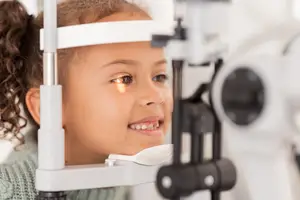
Healthy Vision Plays an Important Role in Childhood
Reading, writing, classroom participation, sports, hand-eye coordination, and digital learning all depend on healthy vision. Even small vision problems can make certain tasks more difficult and may affect confidence, comfort, and academic performance.
Because kids are still growing, regular eye exams help ensure their vision develops properly and gets the support it needs.
Children Don't Always Recognize Vision Problems
One of the biggest challenges with childhood vision problems is that many children don't realize anything is wrong.
If a child has always seen the world a certain way, they may assume everyone sees it the same way. As a result, children rarely complain about vision problems, even when they have difficulty seeing clearly.
Regular eye exams allow our eye clinic to evaluate vision before concerns begin affecting school performance, daily activities, or overall development.
Common Signs Your Child May Need an Eye Exam
While some children show no obvious symptoms, certain signs may indicate a vision problem. Parents may notice:
- Squinting
- Frequent headaches
- Holding books or devices very close
- Sitting close to screens
- Difficulty seeing the board at school
- Eye rubbing
- Covering one eye
- Short attention span during reading
- Complaints of blurry vision
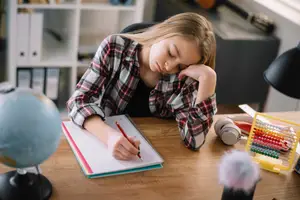
- Difficulty with schoolwork
If you notice any of these signs, a comprehensive eye exam can help determine whether vision is contributing to the problem.
It's More Than a School Vision Screening
School vision screenings can be helpful, but they are not a substitute for a comprehensive eye exam.
Most screenings focus on distance vision and may not detect problems involving eye coordination, focusing ability, depth perception, eye health, or other visual skills that affect learning and development.
A comprehensive pediatric eye exam provides a much more complete evaluation of your child's visual system and overall eye health.
What Happens During a Pediatric Eye Exam?
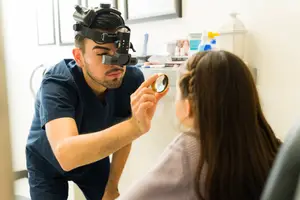
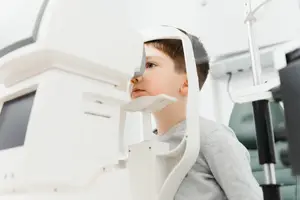
Pediatric eye exams are designed to be comfortable, informative, and age-appropriate.
During the exam, Dr. Shim evaluates:
- Visual acuity
- Eye teaming and coordination
- Focusing ability
- Depth perception
- Eye movement skills
- Overall eye health
- Signs of vision changes or eye conditions
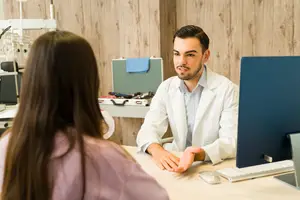
We also take time to discuss any concerns you may have regarding your child's vision, school performance, or visual development.
Nearsightedness Is Becoming More Common
Nearsightedness, also known as myopia, has become increasingly common among children.
Children with myopia often have difficulty seeing distant objects clearly and may require stronger prescriptions as they grow. Because higher levels of myopia can increase the risk of certain eye health concerns later in life, early detection is important.
Our team offers myopia management options designed to help slow the progression of nearsightedness and support long-term eye health.
Schedule Your Child's Eye Exam
Children don't always recognize when they have difficulty seeing clearly. Regular eye exams help ensure their vision supports learning, development, and everyday life.
Whether you're scheduling your child's first eye exam or continuing routine care, our team is here to help.